MEMA
A practical education initiative translating AI tools and concepts into useful workflows for clinicians, researchers and medical learners.
A clinically grounded portfolio of formal learning, education, workflow products and governance work—designed to make AI useful, accountable and safe in real healthcare settings.
The goal is to build imaging services that benefit from AI without compromising safety, governance or consultant accountability. Technology supports clinical judgment; it does not replace it.

Education, workflow and governance projects built around real needs—without overstating what the technology does.
A practical education initiative translating AI tools and concepts into useful workflows for clinicians, researchers and medical learners.
A reporting workbench built around reusable templates, consistent terminology and a clearer path from imaging findings to an actionable report.
A dashboard for activity, demand, turnaround and operational signals that support better decisions across a growing diagnostic network.
A practical governance package covering approved use, human oversight, data handling, audit trails and incident response.
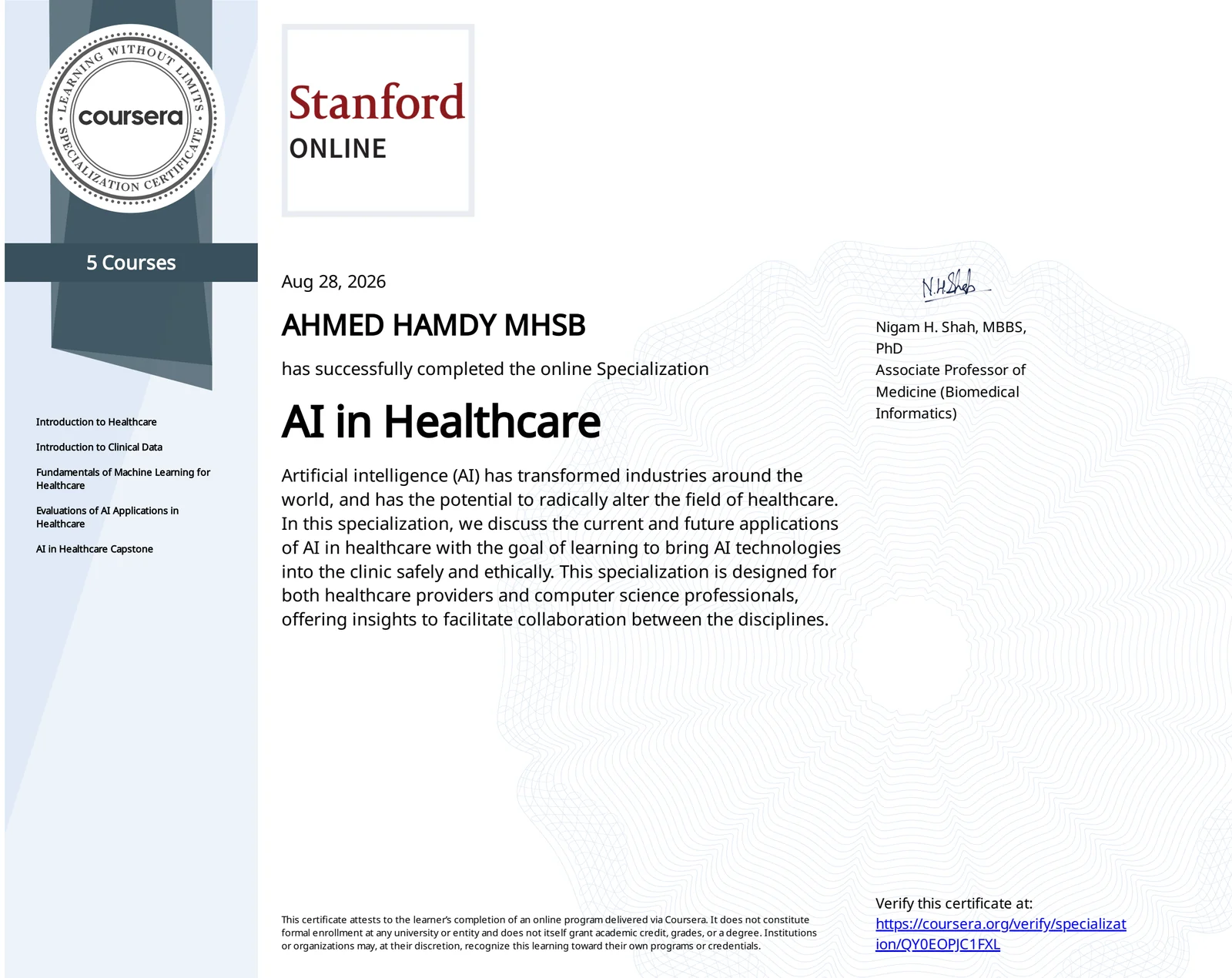
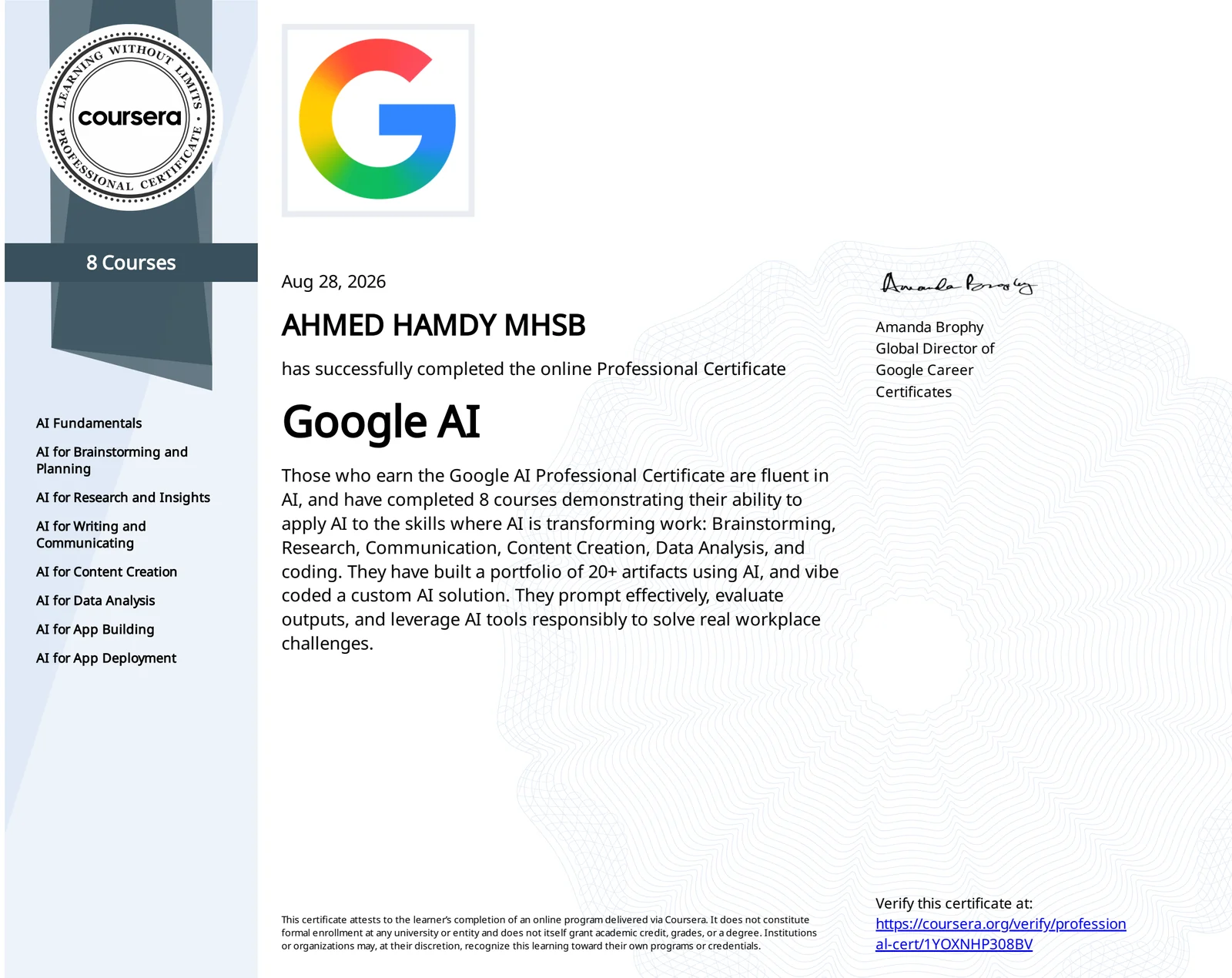
Nine learning records across medical, academic and technology institutions. Every card clearly distinguishes completed credentials from programmes still in progress.
Formal learning focused on clinical implementation, radiology and practical AI use.
Harvard Medical School · Executive Education
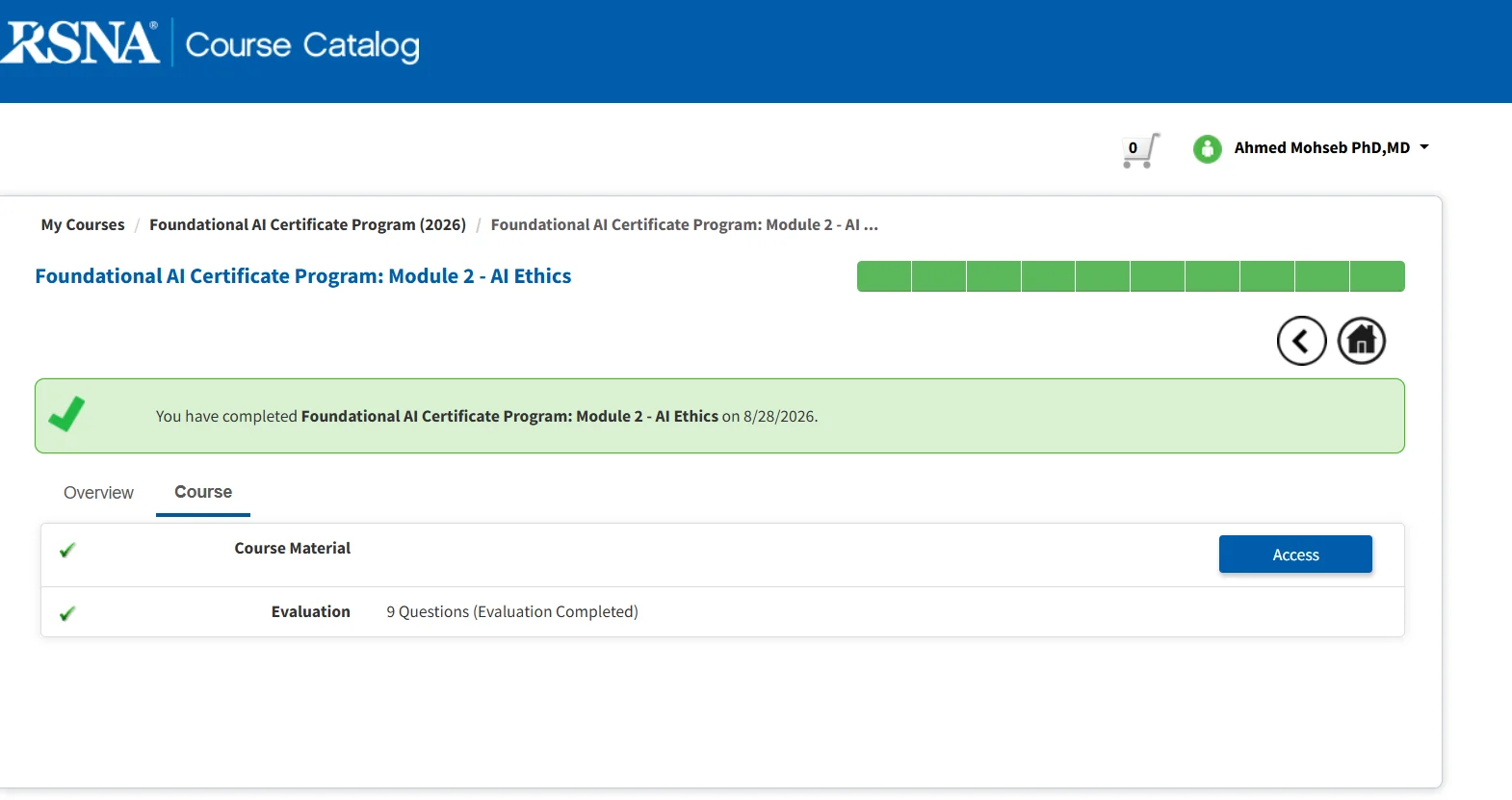
Radiological Society of North America (RSNA)
The American University in Cairo · Onsi Sawiris School of Business
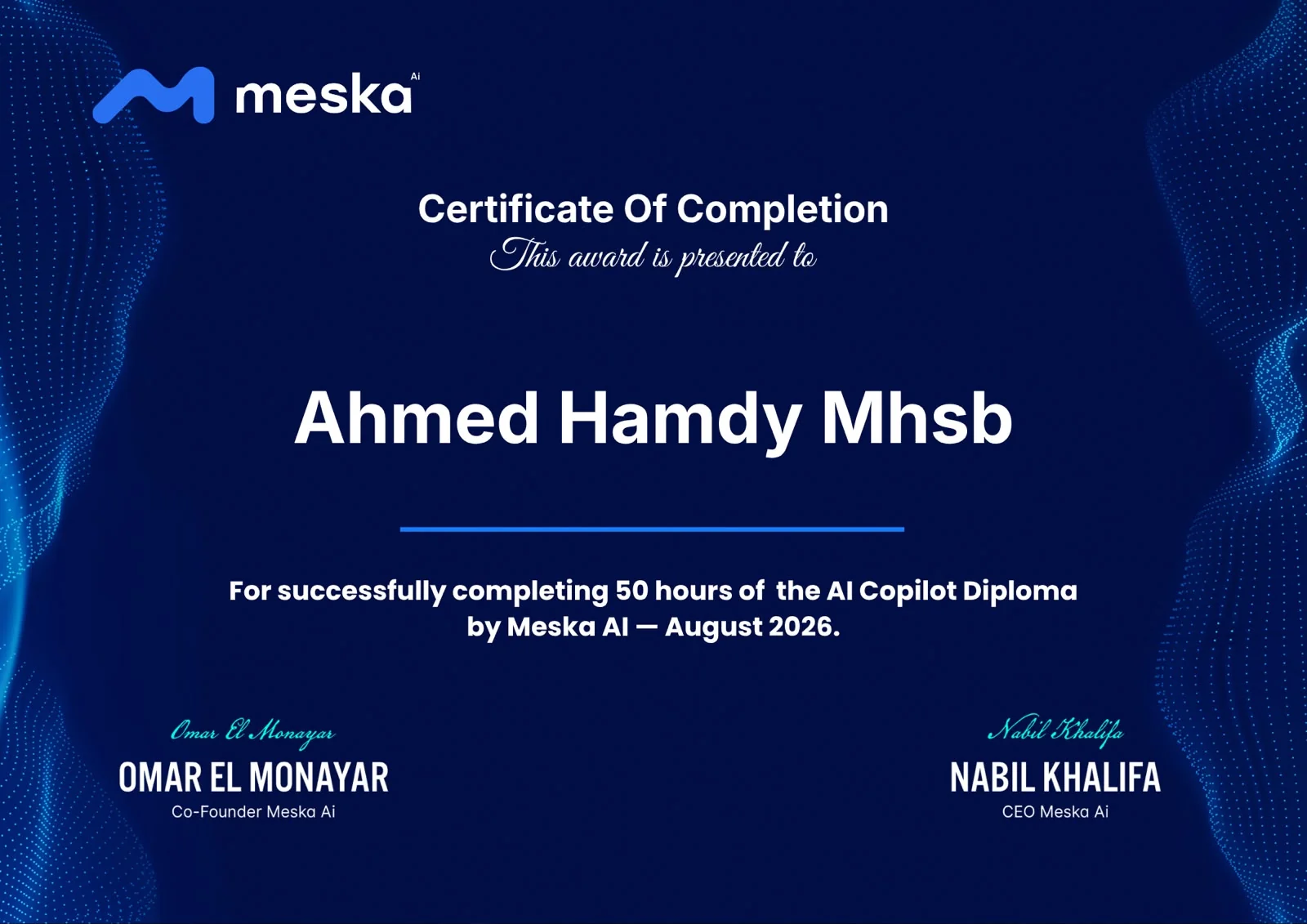
Meska AI
Multi-course credentials in healthcare AI and applied professional AI workflows.
Training in responsible health AI, shared terminology, standards and emerging regulation.
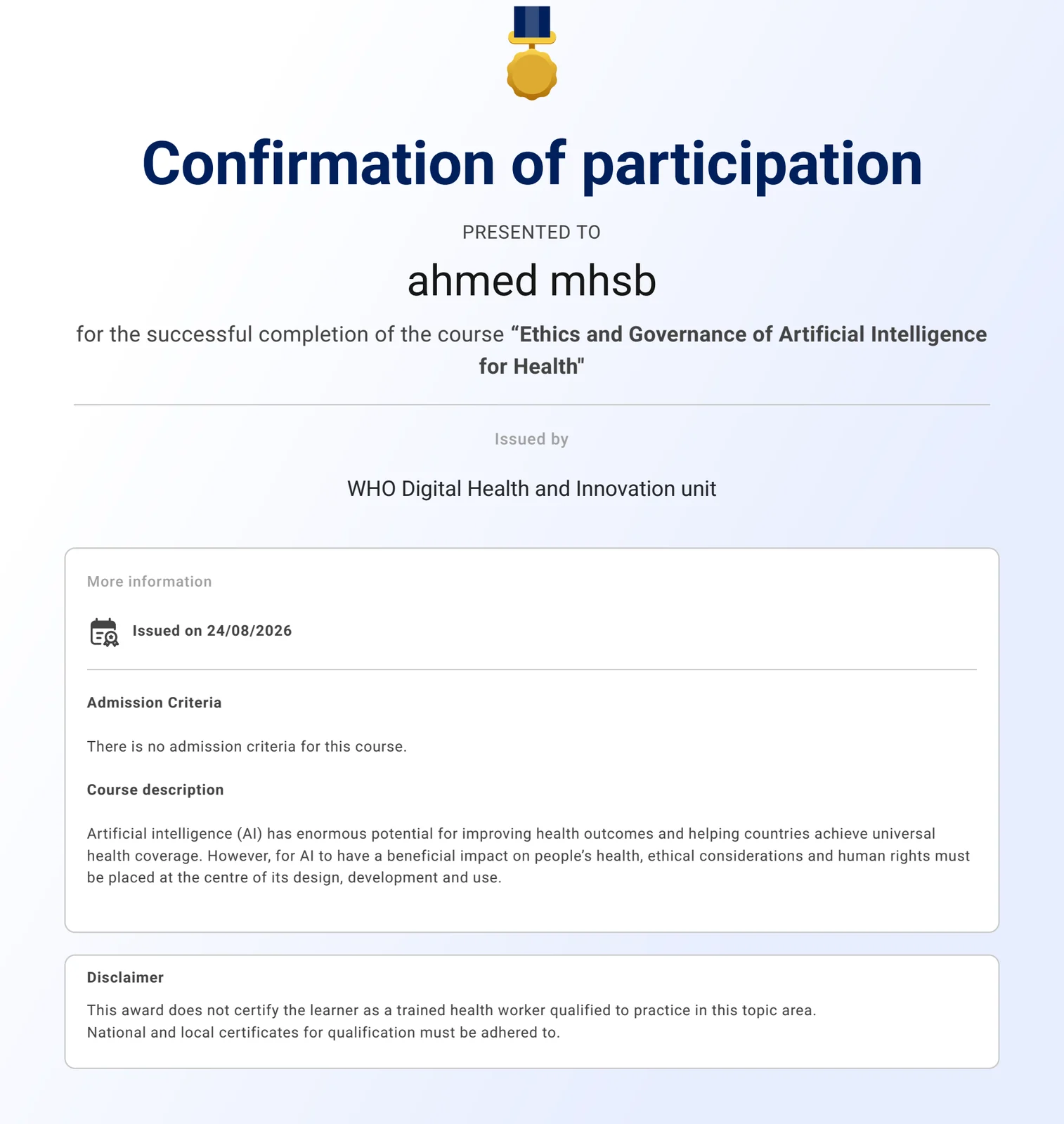
World Health Organization · Digital Health & Innovation Unit

British Standards Institution (BSI) via Coursera

British Standards Institution (BSI) via Coursera
Programme statuses and dates were reviewed against the supplied credential portfolio. The Harvard enrollment screenshot is not displayed because it contains personal contact information.
Clear boundaries protect patients and help institutions evaluate AI’s role realistically.
The value is not using a tool because it is new. It is making a clearer clinical or operational decision while keeping human responsibility intact.
Every consequential medical step remains clinician-reviewed. AI supports judgment; it does not replace it.
Responsible adoption needs clear rules for data handling, approved use, audit trails and incident response.
The useful question is where AI improves clarity, consistency, education or operational decisions in real practice.
Important: The work shown here supports education, workflow design and governance. AI does not independently diagnose patients or replace specialist clinical review.